
"Central American coffee exports"
2000 article(s) found

A brief introduction to the cultivation of boutique coffee beans in Mercedes Manor with rich flavor, geographical location, climate and altitude
Salvadoran coffee ranks side by side with Mexico and Guatemala as the producers of Asa and Merdo, and is fighting for the top one or two places in China and the United States with other countries. The highlands of origin are large coffee beans of all sizes, which are fragrant and mild in taste. Like Guatemala and Costa Rica, coffee in El Salvador is graded according to altitude, and the higher the altitude, the better the coffee

Central American High Altitude Coffee Costa Rica Herbalife Estate Introduction Cup Test Data
Professional barista exchanges, please pay attention to Coffee Workshop (Weixin Official Accounts cafe_style ) Costa Rica Orange County-Cafetalera Herbazu Costa Rica is the most stable and best quality coffee in Central America. Coffee production has a very long history. Coffee has been exported to Britain as early as 1800 in the 19th century. In 1880, the view of fine coffee was observed.

A brief introduction to the Market Price of Fine Coffee Bean varieties in El Salvador Mercedes Manor
The ancient city was built on a peninsula extending into the Atlantic Ocean and occupies the end of a mountainous island, with a steep slope dividing it into the scenery of El Salvador above and the cities below (upper and lower cities). It can be reached by elevator or climbed on foot. The city wall preserved along the steep slope is arched. The upper city overlooks the activities of the people in the city below. Uptown support
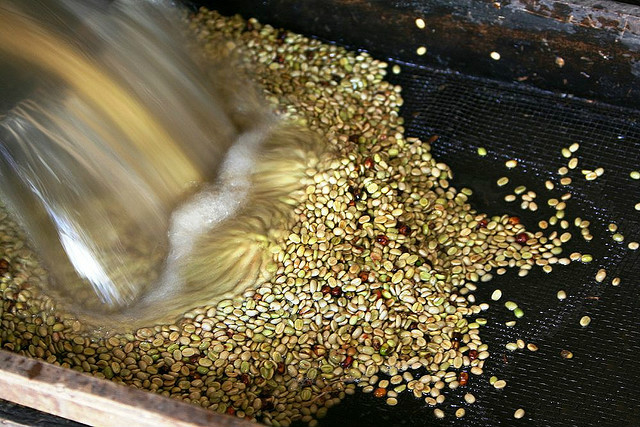
Coffee beans Central American region Honduras choose Highland Coffee Honduran Coffee beans hand-washed Honduras
Speaking of Honduran coffee, many people may feel very strange. Is there coffee in Honduras? In my impression, this is one of the most restless countries in China and the United States, and the current political situation is still very unstable. The only thing that can be connected with it is the world-famous diving resort of Honduras Blue Cave. Coffee? Will there be coffee production in such a chaotic country? But, indeed, Hong

A brief introduction to the overall soft flavor and aroma characteristics of El Qomolangma boutique coffee beans
Like Guatemala and Costa Rica, coffee in El Salvador is graded according to altitude. The higher the altitude, the better the coffee. It is divided into three grades according to elevation: SHB (strictly high grown) = highlands, HEC (high grown central) = mid-highlands, and CS (central standard) = lowlands; the best brand is Pipil, which is Az.

Central and South American bean flavor Guatemala Antigua coffee beans related stories wash Latifen
Related story Mayan coffee culture some people say that you will see a wonderful story in the unique smoky taste of a cup of Antigua coffee in Guatemala, which is a story about Indians. Drinking pure Antigua coffee from Guatemala and playing a South American folk song. Our thoughts can be pulled far away, as far as we have never met before. Was in Guatemala horse.

Panamanian casa ruiz Cooperative boquete classico (Poquet Classic)
Panama is also a Central American country. Many people who like coffee know Panama because of the name of Esmeralda Geisha in Panama. Panama is also a Central American country that produces high-quality coffee, bordering Costa Rica to the west and Colombia to the east. It is one of the top stars in coffee-producing countries. This time, I would like to introduce you to Chiriqui from Panama.

Salvadoran Coffee Flavors Sonsonate Province IzaIco Region
In Cuscacbapa, El Salvador, the beans are packed and ready for export. El Salvador's coffee is a Central American specialty, light, aromatic, pure and slightly acidic. Like Guatemala and Costa Rica, coffee in El Salvador is graded according to altitude, with the higher the altitude, the more coffee. Good. The best brand is Pip.

Introduction to the quality and taste characteristics of El Salvador Pacamara coffee bean flavor description treatment
El Salvador is one of the small countries in Central America with a densely populated population. The flavor of its coffee is characterized by excellent balance. Today, this coffee accounts for 40% of the country's exports. 35% of the extra hard beans of the best coffee are exported to Germany from January to March. In the early 1990s, guerrilla warfare greatly damaged the country's national economy and made coffee production.

A brief introduction to the treatment method of grinding degree and baking degree of fine coffee beans in Mercedes Manor
Coffee originated in the early 1990s, guerrilla warfare greatly damaged the country's national economy, reducing coffee production from 3.5 million bags in the early 1970s to 2.5 million bags in 1990 and 1991. The eastern part of the country was most affected by guerrilla warfare, and many farmers and workers were forced to leave the manor. The shortage of funds has led to a sharp drop in coffee production, from 1200 kg per hectare in the past to per hectare today

Introduction to the fragrant and pure coffee flavor of El Salvador Mercedes Manor
The national emblem of El Salvador was used on September 15, 1912. The national emblem of El Salvador is an equilateral triangle whose three yellow lines represent equality, truth and justice respectively. Five volcanoes rise between the Pacific Ocean and the Atlantic Ocean, symbolizing the five countries in Central America. The pole of freedom and the red cap of freedom stand high on the top of the mountain, radiating the light of freedom and liberation.

Introduction to the taste of Salvadoran coffee with balanced taste and good texture
Features of Salvadoran coffee: Salvadoran coffee is a specialty of Central America, where coffee is light, fragrant, pure and slightly sour. Flavor: balanced taste, good texture recommended roasting method: medium to deep, there are many uses ★: general Salvadoran coffee market: the best quality Salvadoran coffee is exported from January to March, 35% of the extra hard beans are exported to Germany. nineteen

Starbucks Costa Rica's most expensive Coffee Bean Honey Coffee Bean hand Flushing temperature Grinding Flavor
Professional coffee knowledge exchange more coffee bean information please follow the coffee workshop (Wechat official account cafe_style) Costa Rican coffee with full particles, ideal acidity and unique strong flavor. Tarrazu in Costa Rica is one of the major coffee producing areas in the world. The coffee produced is light and pure in flavor and pleasant in aroma. The volcanic soil in Costa Rica is very fertile.

A brief introduction to the history and culture of the origin and development of boutique coffee beans in Mercedes Manor with balanced taste
In the early 1990s, guerrilla warfare greatly damaged the country's national economy, reducing coffee production from 3.5 million bags in the early 1970s to 2.5 million bags in 1990 and 1991. The eastern part of the country was most affected by guerrilla warfare, and many farmers and workers were forced to leave the manor. The shortage of funds has led to a sharp drop in coffee production, from 1200 kg per hectare in the past to less than 9 per hectare today.

El Salvador Coffee Bean
El Salvador is one of the small countries in Central America, where coffee is light, aromatic, pure, slightly acidic, and the flavor characteristics are excellent balance, which is a specialty of Central America. It has sour, bitter and sweet taste characteristics, and the best baking degree is moderate and deep. In the early 1990s, guerrilla warfare greatly damaged the country's national economy, reducing coffee production from 70 years.

A brief introduction to the cultivation of fine quality coffee beans in Mercedes Manor, geographical location, climate and altitude
In the early 1990s, guerrilla warfare greatly damaged the country's national economy, reducing coffee production from 3.5 million bags in the early 1970s to 2.5 million bags in 1990 and 1991. The eastern part of the country was most affected by guerrilla warfare, and many farmers and workers were forced to leave the manor. The shortage of funds has led to a sharp drop in coffee production, from 1200 kg per hectare in the past to less than 9 per hectare today.

Introduction to Central American boutique coffee estate: NARANJO El Cafetal, Costa Rica
Professional coffee knowledge exchange more coffee bean information Please pay attention to the coffee workshop (Wechat official account cafe_style) Costa Rica has a mild climate, rainy mountains and fertile soil formed by volcanoes, which makes Costa Rica the most suitable environment for coffee growth. In addition to the superior growth environment, the Costa Rican government also had the foresight to start at the beginning of the 19th century.

Introduction to the flavor and taste characteristics of Costa Rican St. Roman Manor Coffee
Costa Rica is located in the Central American isthmus, belonging to North America, 10 north latitude, 84 west longitude. It is bordered by the Caribbean Sea to the east and the North Pacific Ocean to the west, with a coastline of 1290 km (212km on the east coast and 1016 km on the west coast). Costa Rica borders Nicaragua in the north (309 km long border) and Panama (639 km long border) south-southeast. Total

Description of coffee flavor characteristics of Salvadoran coffee planting and production areas of coffee
Salvadoran coffee refers to the coffee produced in the small South American country of El Salvador, where the coffee body is light, aromatic, pure, slightly sour, the flavor is extremely balanced, is a specialty of Central America. With sour, bitter, sweet and other taste characteristics, the best baking degree is moderate, deep. In the early 1990s, guerrilla warfare greatly damaged the country's national economy, increasing coffee production from the early 1970s.

A brief introduction to the market price of pure slightly sour Salvadoran boutique coffee beans
The eastern part of the country was most affected by guerrilla warfare, and many farmers and workers were forced to leave the manor. The shortage of funds has led to a sharp drop in coffee production, from 1200 kg per hectare in the past to less than 900kg per hectare today. In addition, the government imposed an additional 15% tariff on exported coffee in 1986, that is, an additional 15% in addition to the existing 30% tax. Taxes, together with unfavorable